
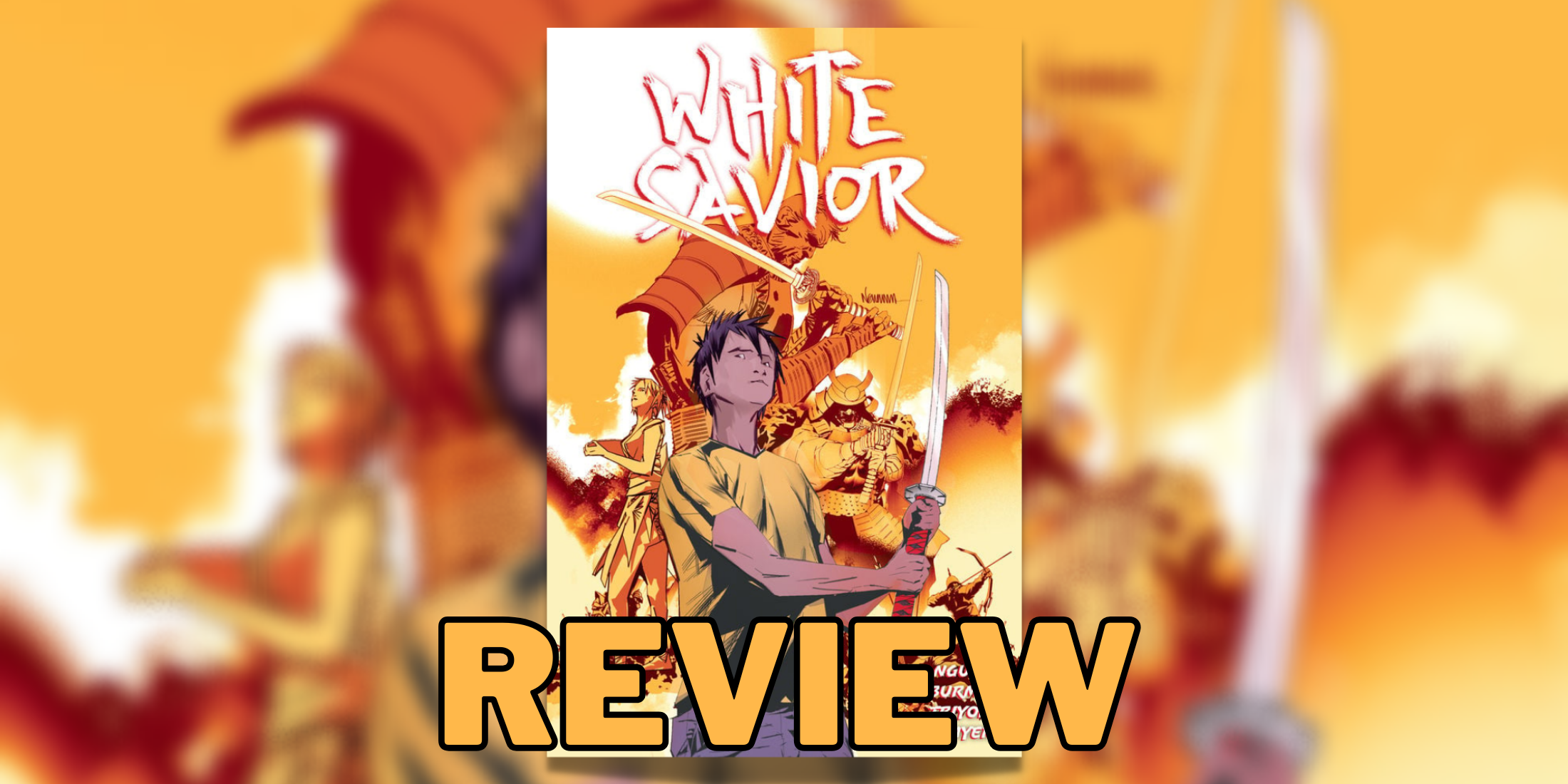
White Savior Review
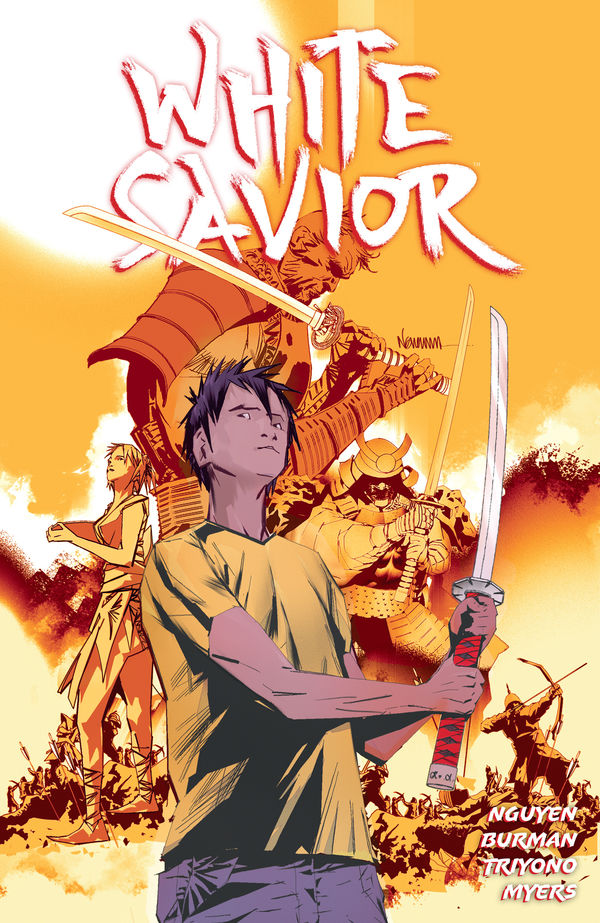
White Savior Review
Written: Eric Nguyen and Scott Burman
Art: Eric Nguyen
Colors: Iwan Joko Triyono
Lettering: Micah Myers
Designer: Skyler Weissenfluh
Digital Art Technician: Josie Weaver
Publisher: Dark Horse Comics
I’m not quite sure I’ve ever read a comic that hit so many popular but not-so-important topics that it also doubled as a serious but not-so-serious soft pitch to Netflix as a limited series show. White Savior turns cultural appropriation and topics on race upside down to the side, then back over to reveal hypocrisy and the ridiculousness of it.
This probably makes this a good time to add that oh-so-daunting trigger warning for you sensitive people because if you’re sensitive about these kinds of political and socially acceptable yet unacceptable topics, then you might be filled with negatively charged particles and spontaneously combust faster than you can type, “—hashtag cancel this shit.”
Or… you can be #calm and roll on the floor laughing because this is the funniest Asian historical fiction coming-of-age romance adventure I’ve ever read in my life. The classic editor notes return to add some punchlines, which I thought was pretty great. It definitely gave Micah Myers a really cool highlight, lettering the music to Darth Vader’s evil entrance music.
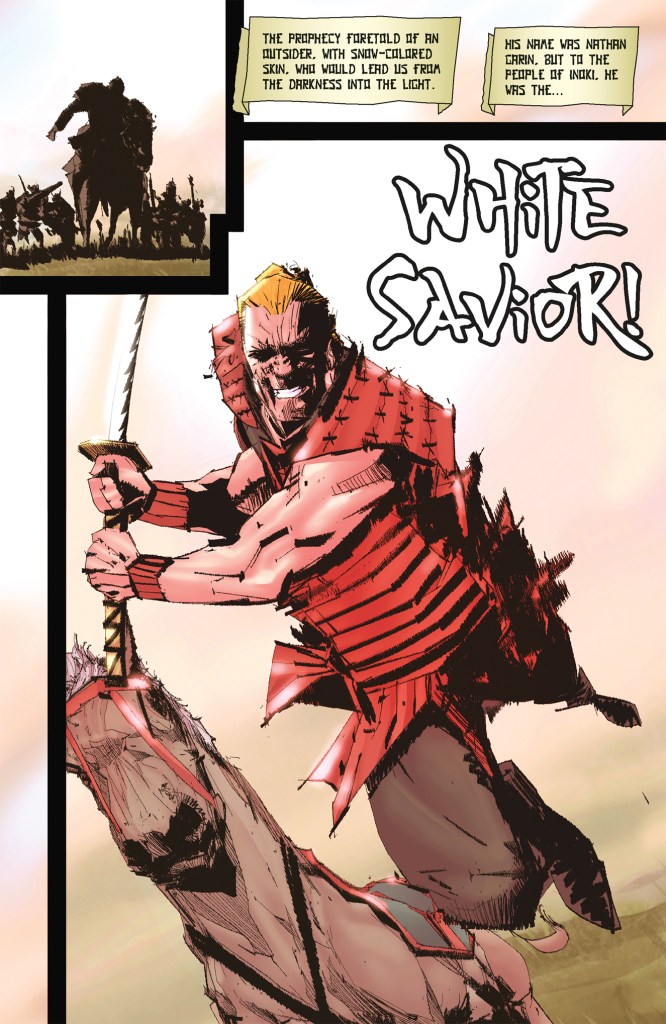
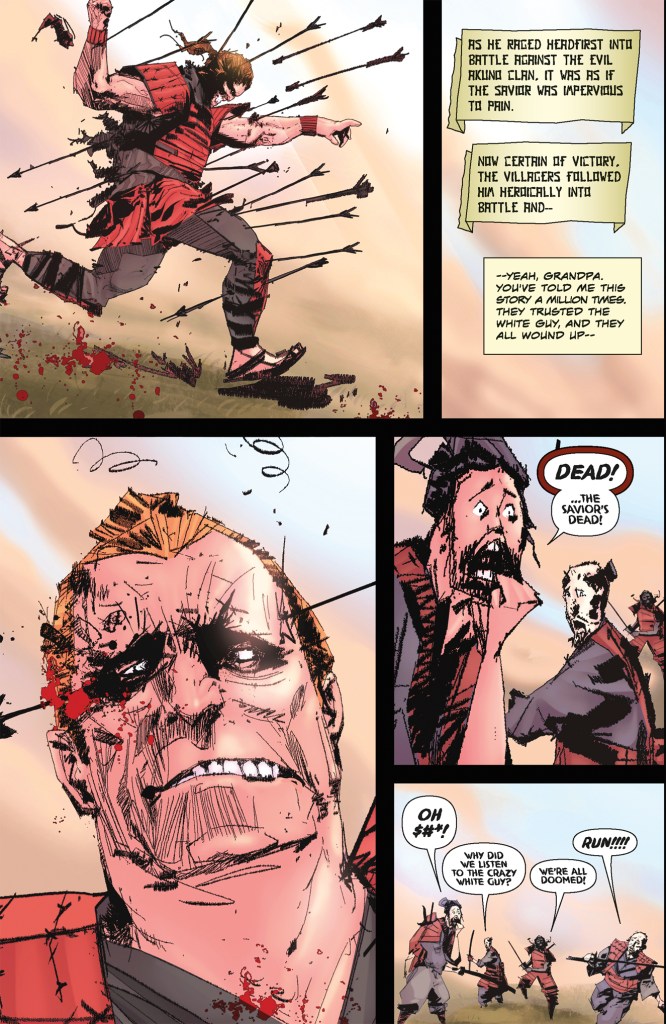
So, you’re walking through a comic shop or maybe scrolling through the endless pages of an online storefront and see the title White Savior, but you’re intrigued while being cautiously confused because your trigger sensor is preloaded—that is, until you start reading. This four-issue mini-series wraps up to a whopping total of 116 pages of glorious illustrations, all a labor of love that took seven years to bring to life by Eric Nguyen, who is also the co-writer of this satirical masterpiece.
If I were the creative executive of Netflix, I’d say no to the television deal, but definitely yes to a Netflix Originals feature film deal. The dialogue here is golden, like references that people from Gen-X, post-boomers, and even boomers might understand. That’s a big deal to some people, but I only really added that part for them. The White Savior follows the story of an Asian-born American kid named Todd Parker, no relation to Peter Parker, who lives in New York and gets stuck watching his grandpa while his parents are on vacation in Branson, Missouri.
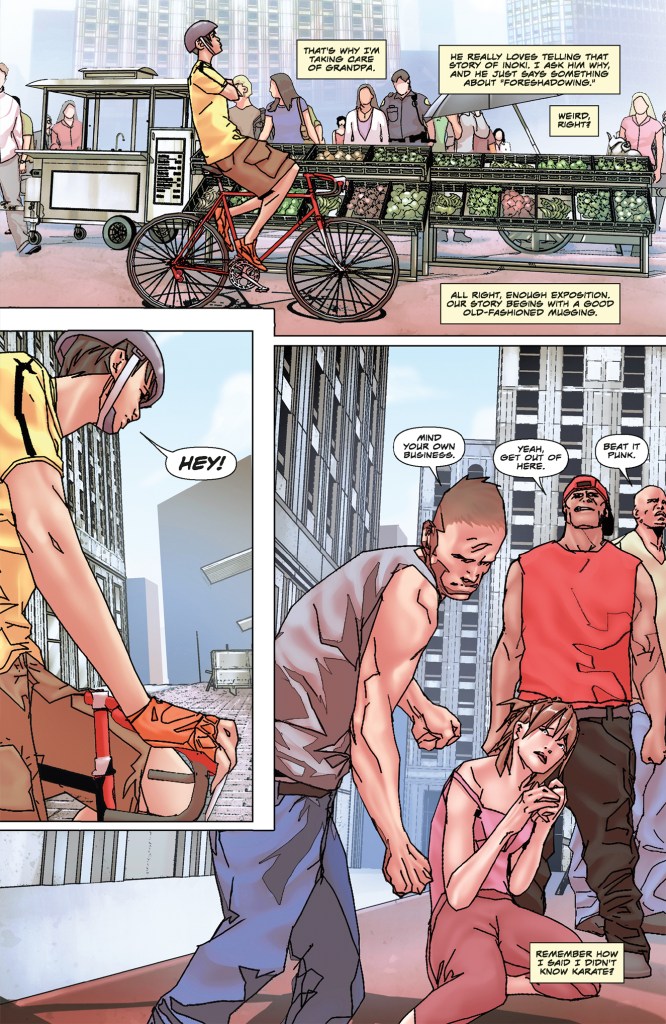
While out to get some food and Oreos for his grandpa, Todd saves a would-be damsel in distress by three would-be muggers but soon comes to find out that not being able to ask a girl out isn’t his only problem.
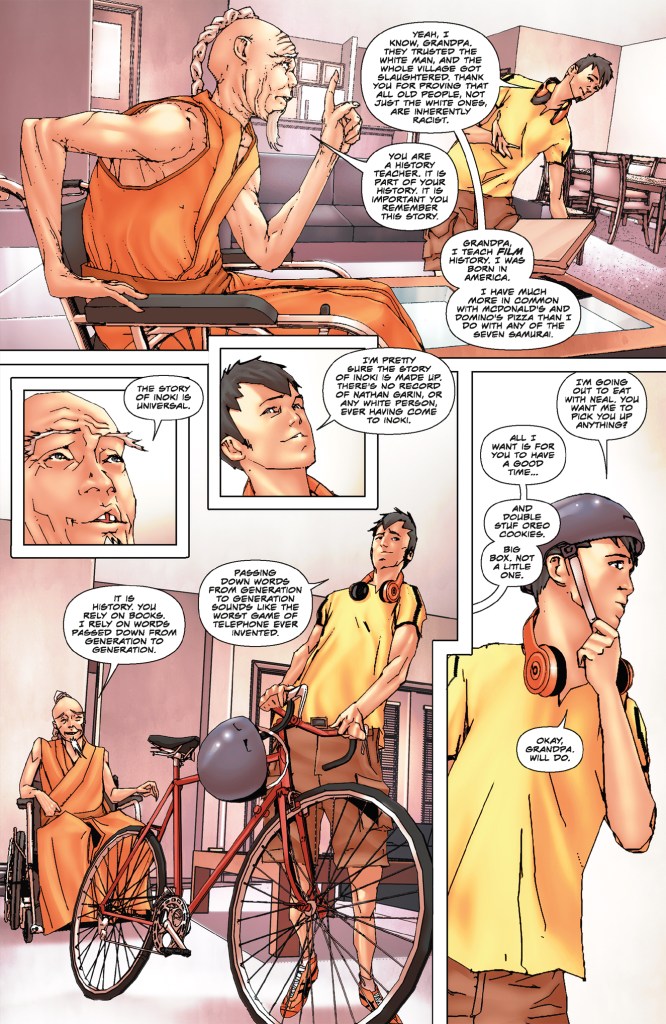
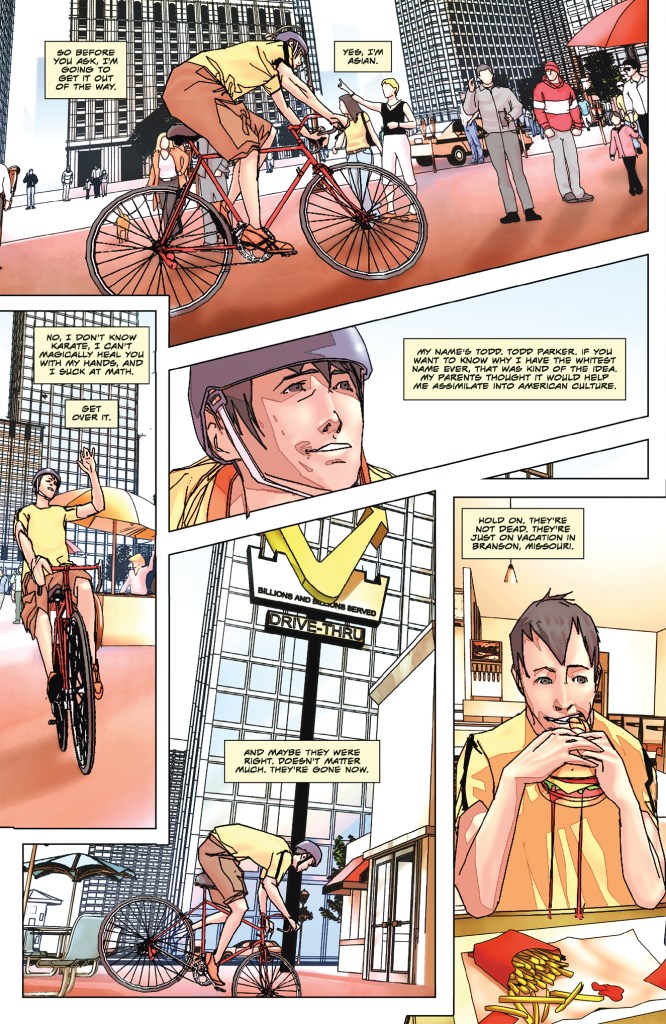
This girl stole his wallet, Maggie, as he’d soon find. Against the advice of his walking fitness magazine-bound friend, Todd confronts her at the restaurant he was at. This leads to a chase that kind of gives me Warriors of Virtue vibes. Deep cuts, right? Who remembers that dope-ass movie from the mid-90s? I still want my Roo’s versus turtles, damnit! Anyway, Todd simply slips into what I can only illustrate as a wonderfully illustrated portal that uses witty dialogue and color to mask the fact that it does such a great job of being vague.
So rewind the clock all the way back to the day of the samurai in feudal Japan. Todd wakes up to warriors of the Omura Clan fighting warriors of the Akuna Clan. Todd barely survives the battle, putting his reflexes to the test, fueled by narrated monologuing and, of course, humor, but not before anger prevents the Akuna Clan’s leader, Kenzo, from killing the Omura Clan’s leader, Yoshiro. At this point, you might be wondering where the hell the white savior thing comes into play.
Well, after Todd inadvertently saves Yoshiro’s life, he awakens to being bathed by some nice non-gaisha Asain ladies. Feeling pretty lucky but awkwardly basking in the old-school customs of his ancestors, Yoshiro introduces him to a man whom he refers to as the white savior. Apparently, the title of the book is more of a prophecy given to the hulking figure that Yoshiro believes will lead the Omura Clan to a certain victory against the Akuna clan because fate dictates it.
Of course, this all feels too real because it all seems so familiar until… So if we back this up just a little, Todd’s grandpa was telling him a story about one of the legends of the seven samurai from his past—a conflict about a warrior who saves a certain clan of people similar to the ones he’s unwantedly come to be surrounded by.
And boy, do the shenanigans get even more ridiculously bonkered from here on out? As it turns out, Maggie, the girl who stole his wallet, wound up in the same place, and when Todd tells her of the story and how dangerously stupid this white savior character is, they decide to conduct themselves heroically—in a manner of speaking.
Because what Yoshiro doesn’t know is that in his grandpa’s tale, the white savior charges the village into battle and gets everyone killed. Of course, coming up with a plan wasn’t too hard since their being there would mean they’d be dead too; however, planning and execution are really two different things.
Unfortunately, while Todd attempts to distract Yoshiro so Maggie can give this white savior, Nathan Garin, some knockout poison, he admits that the leader of the Akuna clan paid him to be an actor for the Omura clan’s prophecy to guarantee Toshiro’s defeat. To make matters even worse, the combination of saki bombs and poison creates a hazardous accident in which Nathan falls on top of a cache of upright weapons, suffering several fatal implements.
As Maggie explains what happens, Todd panics because what started as a rescue mission has now turned into a game of where to hide a dead body. Thank you, the Gods, for all of Maggie’s great horror movie inspirations, including cutting off the face of Nathan and suggesting to Todd that he wear the face as a disguise, playing a very cynical yet hilarious pun twist on the almost always offensive comment “all Asians look alike” because of the white face mask.
Get it? Did you get it? Oh well, if you’re still here, you’ve got to get it. No, I mean this obviously collected trade paperback book called The White Savior. It will definitely have you calling Steve at At&t and telling him to screw you for no reason.
It’s probably overkill at this point to say any more good things about this book, which sounds awfully biased of me, but you’re welcome because I’m a big fan of George Carlin and some of the old-school ballbusters of the past. This story might seem culturally insensitive or extremely offensive, and if it hits your triggers, that’s okay.
The world needs stories like these so we don’t have to take life so seriously. I mean, when you can write a story that includes Dwayne The Rock Johnson quotes into its Braveheart-style inspired speech, then turn around and use battle tactics while promoting the Starz Original Spartacus show, what’s there to be upset about?
Even Batman references made it into the script. This was a fun-filled, historically painted-adventure with funny turns and entertaining puns. Every character was unique and interesting to read about, with dialogue and more. While I won’t continue the rest of the story, the first two issue breakdowns are on me, but the other two issues are on you.
At least buy a copy to say I read that once when you see it pop up in your Netflix queue. Don’t forget to support your local comic store or visit your favorite artists and creators at cons. As always, stay geeky, share the network, and don’t forget to catch me on the latest episode of Comics’N’Poptarts.

Michael J. Florio
Michael is a versatile creative professional, excelling as a comic writer, editor, and screenwriter. He holds notable credits at Advent Comics, Grok Comics, Champion Comics, Alter Ego Arts, and Super Serious Comics, Mazzi Productions not including his own projects like Wild Oni and Iron Jaguar. Aside from being an internationally published editor, Michael has been the editor-in-chief at Inked Studios, where he’s assisted on over 40 crowdfunding campaigns, contributing to projects like Exiled (Wesley Snipes), Redempt1on (Austin St. John), and Bleeding Pulp (Justin Gray). Holding degrees from the University of Full Sail, Michael resides in Biloxi, Mississippi, where he hosts the Comics’N’Poptarts podcast and actively engages with the Mississippi Gulf Coast Writers Guild Chapter, sharing comic expertise. Beyond his creative pursuits, he enjoys family time, storytelling, film analysis, comic reading, and honing voice acting for future prospects.
Leave a Reply