

INTERVIEW | Olivia Cuartero-Briggs Gives Us a Blast of Dragonflame in Fate: The Winx Saga
Are you needing a fae fix since Winx ended on Netflix? Mad Cave is ready to take you back to Alfea, and Geek Network got to explore the next chapter in this magical journey with Olivia Cuartero-Briggs, the writer behind Fate: The Winx Saga. This continuation of the hit Netflix series takes us through the trials and tribulations of Aisha, Kat, Terra, and their fellow fairies as they navigate the challenges of a new school year and new relationships, all while facing a mysterious and dangerous enemy set to unravel everything our favorite fairies hold dear.

Geek responsibly by grabbing your favorite cozy spot, settling in, and letting Olivia’s responses guide you through the mystical realms and explosive magics of genre fiction.
Geek Network (GN): I figure we’d start things off with an easy origin story. What’s your relationship like with the fantasy genre? Are you into books, gaming, D&D or Lord of the Ring? What’s your brand of nerd?
Olivia Cuartero-Briggs (OC): Ah. I like where this is going already!
Interestingly, I never considered myself a “fantasy” person. I come from the world of theater in New York City, which is often very grounded and intimate. It wasn’t until I was in graduate school that I started to think, hey, I really need to crack my brain open and start using my imagination differently. Stretch my boundaries as a creator. Because fantasy is so much more than magic and dragons. It’s world building. It’s the ultimate escapism. And what’s best about it, is that it’s indirect. Meaning, you can take an issue we are currently facing either on an individual level, or as a society, and explore it indirectly by re-casting it in a completely different context. Writing an entire story that deals with sexism and oppression can get really heavy, but – for example – when you make it a society of elves who are being run out of their kingdom – it’s enough removed from the issue that it makes people more comfortable, able to digest it, and have a bit more empathy. Fantasy is super powerful that way. So, I guess I take a pretty intellectual and literary approach to the genre. I think that just makes me a nerd nerd, doesn’t it?
GN: The characters in Fate: The Winx Saga are deeply entwined in intimate relationships, yet this never weighs down the narrative. Instead, it showcases the characters’ strengths and adds a delightful layer of emotional drama atop the chaos befalling the school. How did you balance all that, and was it hard to structure?
OC: Thank you so much! At first, yeah, it was really challenging. Not so much balancing the relationships with the plot and action – I had just gotten a huge dose of that with Jill and the Killers in terms of straddling teen drama and solving a double homicide – but fitting all of those arcs into the allotted 120 pages. But that’s where a good editor comes in really handy. Lauren Hitzhusen and I ultimately decided, for the sake of the art and the pacing of the books, to split what I had come up with into two volumes. That decision really saved the books and allowed me to get all those juicy, teen moments, as well as a lot of levity, into a rather dark and scary story.
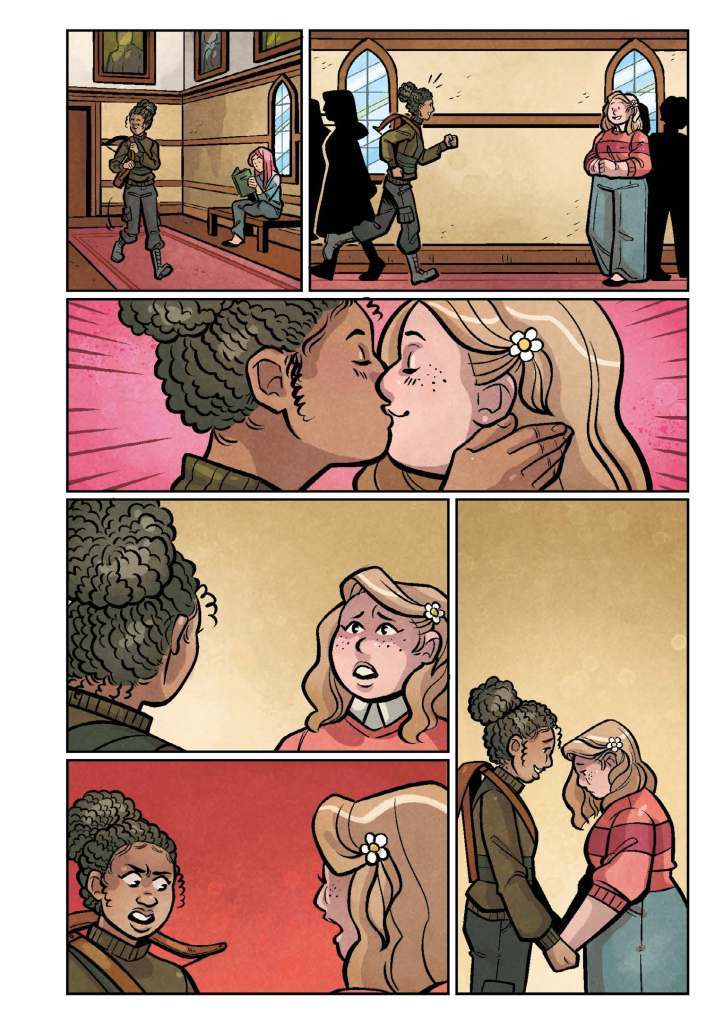
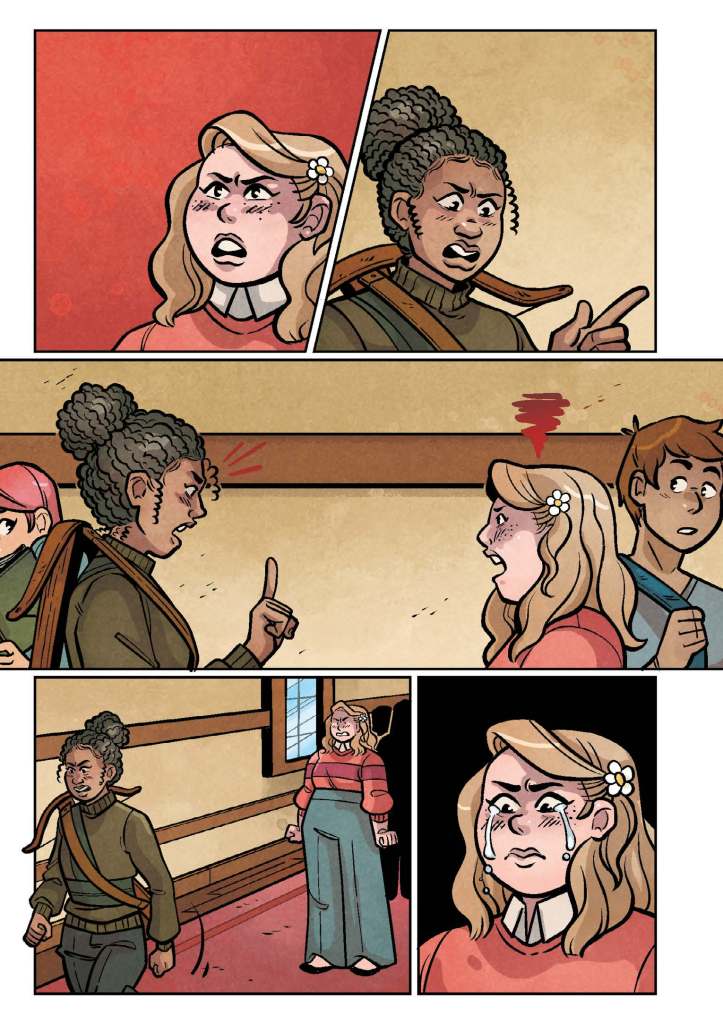
GN: Alfea is such a rich and immersive setting. How do you approach world-building in a way that feels fresh while staying true to the established lore of the Winx universe?
OC: This was actually the most fun part of developing the story. Because when you’re talking about Fate, you’re also talking about the Otherworld as well as The Realm of Darkness, which was never established before in the series. So, I got to create everything about that world, as well as its rules, who is there, and why. As far as the Otherworld goes, I inherited so much great stuff from Brian Young and his team on the TV series. But just like Harry Potter, and any other great fantasy series, each season/volume has to add new elements to the world. That’s where things like the pulse pendant came in – which was actually inspired by my husband and my Oura rings – and the fire lasso. But in each case, I let the needs of the characters and their arcs dictate what new magical elements or rules I introduced. For instance, there had to be stakes surrounding Bloom’s decision to stay in the Realm of Darkness, so I introduced the rule that if a living person stays there for too long, they are unable to leave. That felt native to the world that had already been established, while also being fresh and compelling. I will say that rewatching the series over and over, as well as listening to the soundtrack definitely helped inspire me!
GN: There’s a resurgence of fantasy fans right now—Dungeons and Dragons is popular, and fantasy novels and games are being displayed next to Taylor Swift albums at Target. What do you think makes a great hero in this genre? Are those traits universal through other realms of genre fiction?
OC: Yes! And let’s not forget Romantasy! How fun is that genre!?
For me, my favorite heroes in the fantasy genre are those that have really rich, specific, and compelling origin stories, a certain hole in their soul that, as much as they try, can never be filled, and whatever their power are in some way reflect their inner turmoil. I like tortured heroes, can you tell? I think that’s what makes Bloom, Stella, Musa, and Aisha so compelling as characters. They all have deep flaws and wounds that drive a lot of their decisions and relationships, but they never stop fighting to overcome them and do what’s right. And in so many ways, that’s life, right? A constant battle against our own dark forces to get to the light.
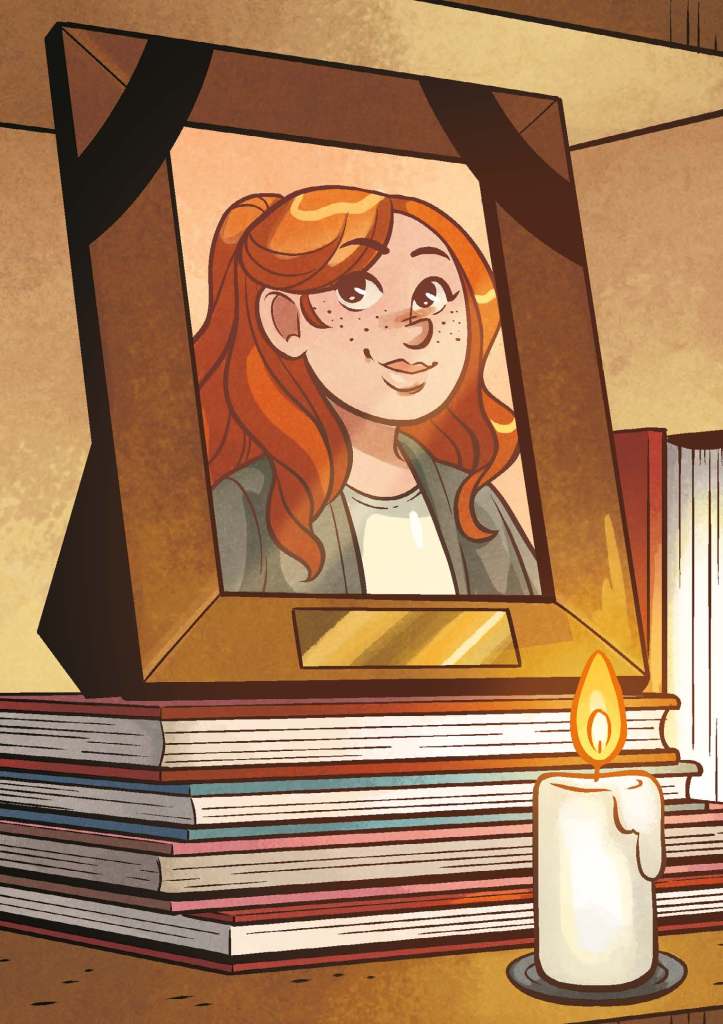
GN: Bloom is a complex character—she’s a little selfish, but it’s justified. Her hesitancy to return to normalcy also makes sense and doesn’t come across as a weakness. Are those complexities hard to show on the page?
OC: Bloom is definitely the most nuanced of the Fate: Winx crew, and she was more challenging to write for that reason. She’s also very understated and keeps her emotions close to the vest, so, as a creator, I couldn’t rely on her to voice her turmoil or hesitancy. That had to come from other places, like Farah and others calling her out. Losing control of her powers in such a way that reveals her inner world. Devices like that. So, while yes, she is more challenging to write, I find she makes me lean in a bit more than the others. Her complexity is intriguing because it feels so honest. That’s the power of Bloom, and it was an honor to get to explore that further.
GN: I was continuously impressed with the organic themes of grief and healing woven into the various threads of the story. Does the availability of magic make it easier to explore these heavier elements?
OC: Absolutely! That element gets explored even more in volume 2, but the availability of magic enabled me to bring what would have been purely thematic directly into the plot. For instance, Stella losing a massive part of her identity, and then literally taking on the identity of someone else – particularly someone who her long-time crush is in love with – allowed me to showcase her pain in a much more direct and tangible way. Same with Bloom’s fire magic. It exposes her guilt and grief quite literally in a way I could not have done otherwise.
GN: Who was the hardest character to write, and what was the breakthrough moment where you figured out their puzzle?
OC: As I mentioned, Bloom is probably the most challenging character, again because of how understated she is, and that she is always running from herself. But it is impossible to write negative actions. Every character has to want something – in the case of Fate, they have to want it pretty badly – for a story to work. So, what does Bloom want more than anything? What could I find in her that could drive story? And I realized it was super simple. She just wants to belong. To be accepted, with or without the Dragonflame. And as much as she doesn’t want to admit it, Bloom really cares. She has a massive heart that she stuffs so far up her sleeve that it’s barely visible sometimes, but it’s a huge driving force for her character. Once I understood that element of her, I was able to create her arc and have a lot of fun with it.
GN: Fans of the original series have expectations, but this continuation also needs to stand on its own. How did you strike a balance between honoring the past and forging a new path?
OC: Good question, because this really was a challenge. The first thing I decided to do was to give a six-month time gap between the end of the series and the beginning of volume one. That enabled me to reset things a bit so that I could start an entirely new story arc. That did mean, of course, that some revelations myself and other Fate: Winx fans were looking forward to had to have already happened. Like Bloom being reunited with her birth mother. That was a bummer. But it allowed me to pay off other story elements that season two had set up, like Terra and Kat’s romantic relationship, as well as the one between Musa and Riven, as well as focus on the triad or sisters-three element that was talked about so much in season two, but never actually introduced. And I made some big choices here as well. Ones I thought would be more interesting in a 240 page arc than what the show proposed, but we’ll see what the fans think at the end of volume 2!

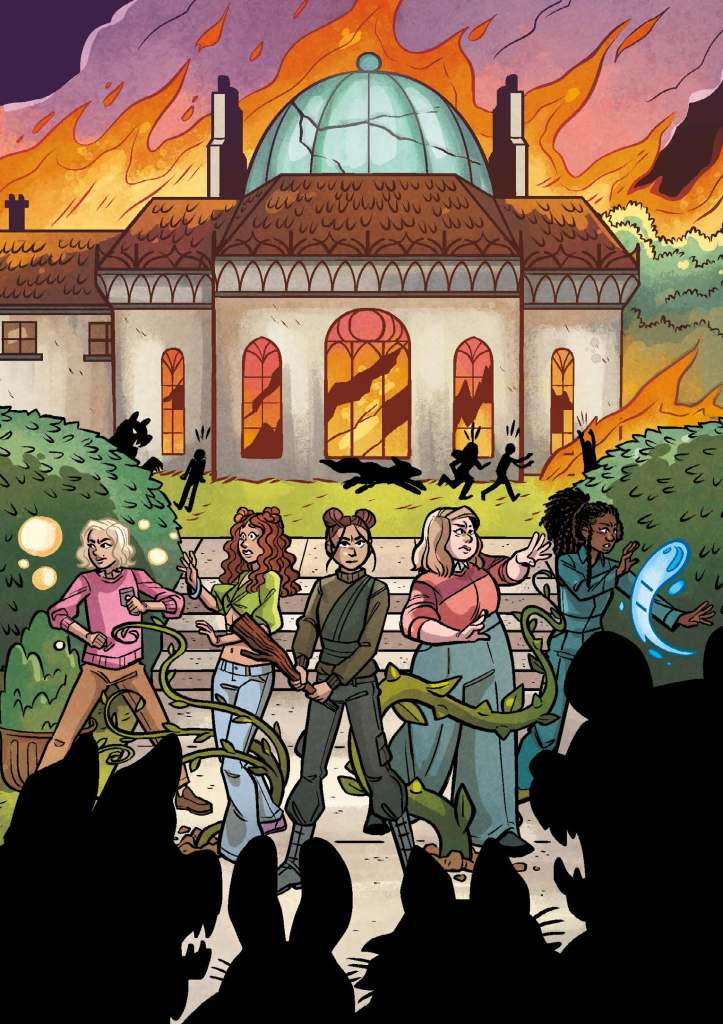
GN: Without giving too much away, our favorite fairies are left in some hot water. Boiling, some might say. Any hints into what fans can expect from future volumes of Fate: The Winx Saga? Are there any particular themes or storylines you’re excited to explore?
OC: Oh boy… What do I say without giving anything away? Well, you can expect Bloom to redeem herself in some unexpected ways, but ones I think are really fulfilling. You can also expect some tearjerker moments from our couples, and a really unexpected but deeply personal decision that Stella makes. You can also expect a lot of action, some cool new characters, and maaaaybe the resurrection of a particularly nasty villain. All of this, of course, building to what we hope will be an incredible volume 3!

Leave a Reply