

Issue x Issue | New 52 Batman Part I
Welcome to Issue x Issue
Welcome to the first entry in what will become a recurring segment here on Geek Network. Issue x Issue aims to dive into specific creator runs, arcs, or events in comic history and break them down issue by issue. Not every entry will follow the same format. Some longer runs will see the series broken down into articles covering an entire volume at a time. In contrast, shorter stories may see a full article breakdown for each individual issue. The goal is for in-depth analysis and reflection, and flexibility in formatting is the best way to properly highlight each story.
Setting the Stage
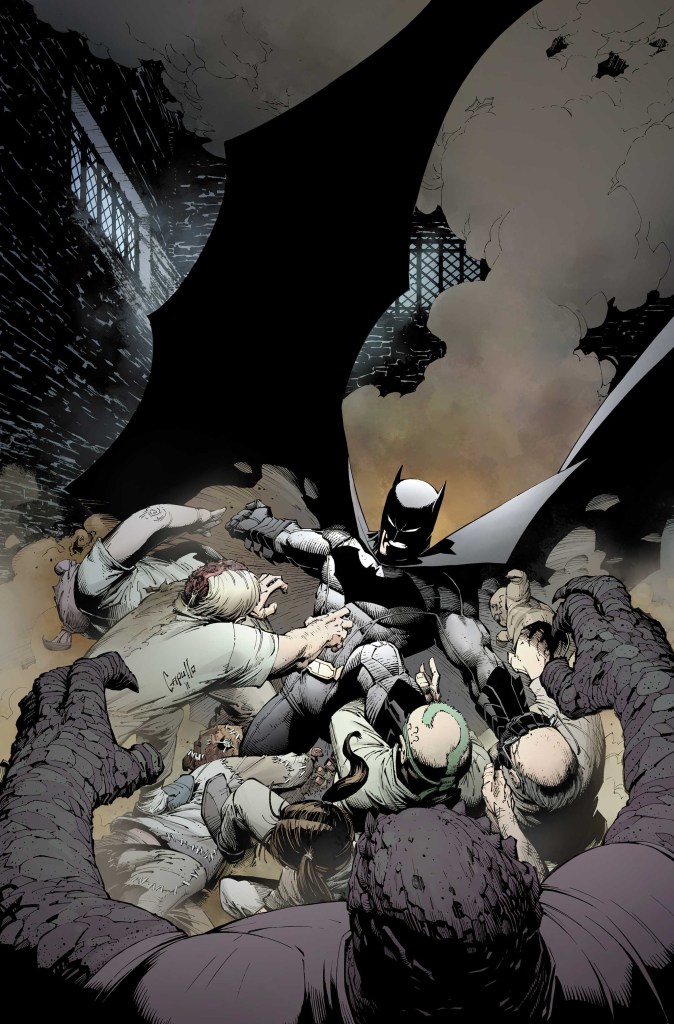
I had to decide on a first series to cover for Issue x Issue. There was only really one option, one book I kept coming back to. That book is, of course, Scott Snyder and Greg Capullo’s 51-issue run on Batman that started in 2011. Though the title ran for 52 issues, #51 was the last time Snyder and Capullo teamed on the title. It’s now heralded as a seminal run on the character – it’s bombastic, inventive, and the result of creators operating at their peak.
It’s also the first comic I read monthly. I’m a lifelong Batman fan, but up until 2011, I only knew of comic lore tangentially through movies, games, or books about the comics. I’d never actually read any of Batman’s comics, let alone read them as they were released. The New 52 changed that. It was a hard reset (sort of, but we’re not here to talk about that) that offered a great jumping-on point. I was a freshman in high school, and for the first time, was reading the comics about my favorite character as they were released, and to make it even better – the comics were damn good.
So, I had to pick the book that started my monthly comic journey as the first spotlight for Issue x Issue. I’ll be taking a look at this run one volume at a time. For this week that means I’ll be looking at the first seven issues – The Court of Owls arc. And in case you hadn’t guessed it by now, this is your SPOILER WARNING. I will be talking about Batman (2011) #1-7 in spoilery detail.
Establishing Batman and Gotham
This series had a high bar to reach. It was the first new Batman #1 ever. Thinking about that pressure is mind-blowing. There was also the added factor of another all-time run on the character (Grant Morrison) finishing their work concurrently in a separate title. Plus, it’s Batman. What this book did far exceeded what could’ve been expected, and it did it immediately.
Whether shrouded in shadow or cutting a silhouette against a sharp light, Batman always looks so… Batman.
The first seven issues, written by Scott Snyder with art by Greg Capullo, inks by Jonathan Glapion, colors by FCO, and letters by Richard Starkings and Jimmy Betancourt, quickly establish the type of Batman story this is going to be. It establishes tone – the first issue is lighthearted at times but cuts through with an undercurrent of gritty horror and seriousness. The ability for this book to operate in a fun yet grounded space is there from the start. It gets readers acquainted with the world, introducing the Bat-family (as it was at the time) and highlights Bruce being a philanthropist. It hits the pillars expected from the start of a Batman story, all while laying the foundation for a larger mystery.


The real magic trick of the first three issues is how seamlessly it familiarizes the reader with Batman and his relationship to Gotham. It plants the seeds of a deeper, longer mystery that Batman rejects because he knows his city. It paces the mystery out perfectly. The first issue introduces the idea of the Court of Owls. The second issue has the Talon appear and confront our hero. The third issue then has Batman discover concrete evidence that the folktale is true.
The Court of Owls exists.
The pacing of the mystery is heightened because the issues also deliver what feels like must-have Batman moments. It features some of the best on-page action Batman has ever seen, thanks to Capullo, Glapion, and FCO completely knocking it out of the park. The New 52 Batsuit is one of my favorites. It’s simple, strikes such an iconic image, and this team makes it look fantastic on every page. Whether shrouded in shadow or cutting a silhouette against a sharp light, Batman always looks so… Batman. It feels sort of ouroboros to describe Batman as just looking like Batman, but there really is something to it. He has a look and feel to him that is so unique, and this book has that in spades.
The action is killer. The detail Capullo brings to the book is second to none, and he brings it to every panel. If it’s not in a stunning action sequence, it’s through a series of silent detective moments, rendering various locations with variety and intrigue. The art propels this book to another level.
. . . it’s bombastic, inventive, and the result of creators operating at their peak.
The mystery here is crucial, and it does something truly special. Snyder and co introduce a brand new villain – an entire organization – into the fabric of the Batman mythology, and it not only lands but excels. Upon debut, The Court of Owls became instantly iconic. The designs are stellar. The depth they added to the lore of Gotham, and the force with which they immediately challenged Batman made them impactful and lasting. It’s difficult to introduce new characters or concepts to the world of Big Two superhero comics. It happens, but these things rarely take off with the level of success The Court of Owls has seen.
Facing the Court
I think a big factor for the success of The Court of Owls comes from two main points: how cleanly they slotted into the larger Batman mythos and how fiercely they challenged Batman on both a physical and psychological level. The first three issues repeatedly tell us Batman knows Gotham completely, that Gotham is his city. Issue #1 even opened with the captions that, according to some of its citizens, Batman is Gotham City. How could there possibly be an avenue of Gotham he doesn’t know? He’s constantly undermining the possibility of the Court’s existence.


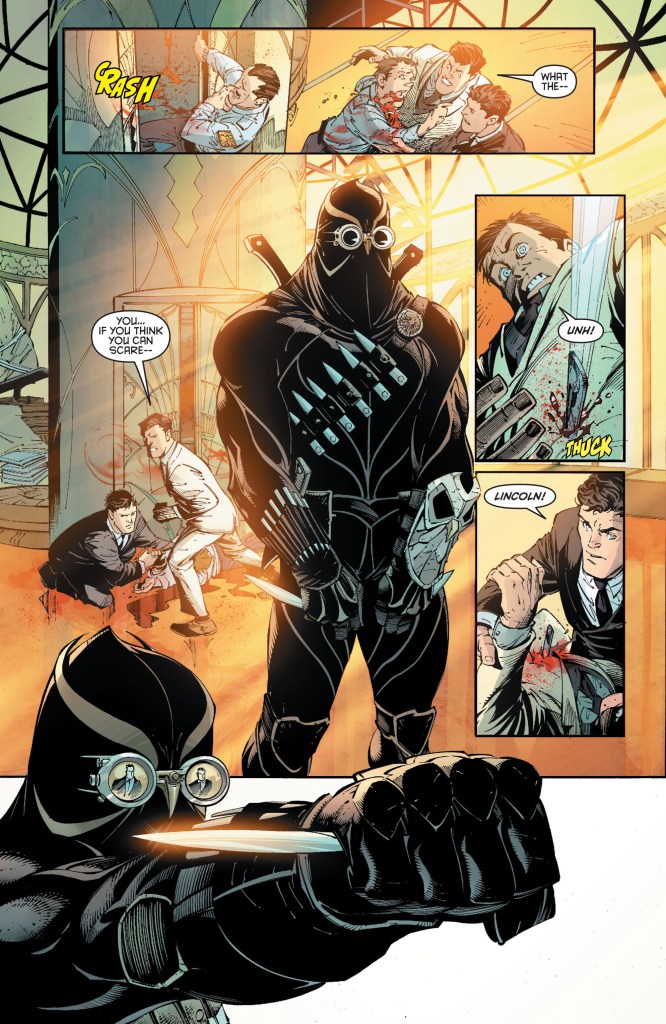
Then he’s proven wrong. Issue #4 picks up after Batman has survived a booby trap left in one of the Owl’s safehouses – itself nested within a Wayne building – and is now further investigating them. He tells Nightwing a story about investigating the Court as a child, hoping to prove they were behind the murder of his parents. The story serves as a lesson that would inform Bruce’s detective work going forward but also creates a deeper personal history between Bruce and the Court. It creates a reason for him to doubt their existence and undermines him completely when he turns out to be wrong.
So, Batman has accepted his mistakes. He’s investigating more thoroughly, but he finds himself woefully unprepared. He’s captured and sequestered in a seemingly limitless labyrinth constructed by the Court beneath Gotham. This is where the book truly hits its stride. It was already a great comic, but these issues of Batman in the clutches of the Court, wandering a marble labyrinth, take it to another level.
They’ve undercut Batman at every level of this story, and now they’re bringing him to his knees.
We see Batman on a descent to madness here. He’s wandering the labyrinth, muttering to himself, with his beard growing out and rocking a crazed look in his eyes. He’s been down there for eight days, and the wear on his body and mind is evident. Some of my favorite images from the entire run come with this sequence. The tattered Batsuit is rendered with such detail, and the torn cape trailing behind like a shadow clinging to him creates such a striking visual. Not only that, but Capullo ups the psychological impact by having Batman visually morph into an owl-man hybrid.
These two issues do so much for both the Court and Batman as characters. The Court showcases its immense power and scale. This is a vast subterranean construction, and they’re using it as a torture hall. There are layers and layers of history baked into the show they’re putting on for Batman. They’re elevated instantaneously to a threat that needs to be taken seriously. They’ve undercut Batman at every level of this story, and now they’re bringing him to his knees.
Of course, Batman endures. That’s what Batman does. He finds a way out, he wasn’t going completely crazy, and the resulting breakout is an issue full of catharsis as Batman gives the Talon an intense beating before blasting a hole in the floor to escape. The fight between the two in this labyrinthian lair is one of the best in the series, with Capullo bringing some intense exaggerations to the Batman design, meant to reflect the heightened and disjointed mental state in which Batman operates.
Prepare for Battle
Batman escapes by the end of issue #6, leaving #7 as a recovery issue. It’s recovery for Batman, preparation for the Court, and some small revelations for Dick Grayson. The “Dick Grayson was meant to be a Talon” subplot this book has going on is… fine. It works and adds some extra layers and credibility to the Court as a larger presence in the myth and history of Gotham, but it’s not the most impactful beat in this arc. A good chunk of this issue is reserved for the conversation between Bruce and Dick, where this information is revealed, and while the reveal, as it pertains to Dick’s character, isn’t the most interesting, the rest of the conversation speaks to the story as a whole – while also slotting in one central element that will play a more significant part in the run later down the line.
The Court of Owls speaks directly to the mysterious idea that there’s always a larger force out there, manipulating things from the shadows. Hiding in plain sight.
This conversation highlights what is ultimately the thesis of this first arc – cities are always evolving. When telling Dick what the Court did to him, Batman replies, “What they did was show me the truth. That the Gotham City I thought I knew, my city… doesn’t exist.” Snyder has said in multiple interviews that one of the core inspirations for this story came from him walking around New York and realizing that the very fabric of the place had changed. It wasn’t the same as it had been years ago.


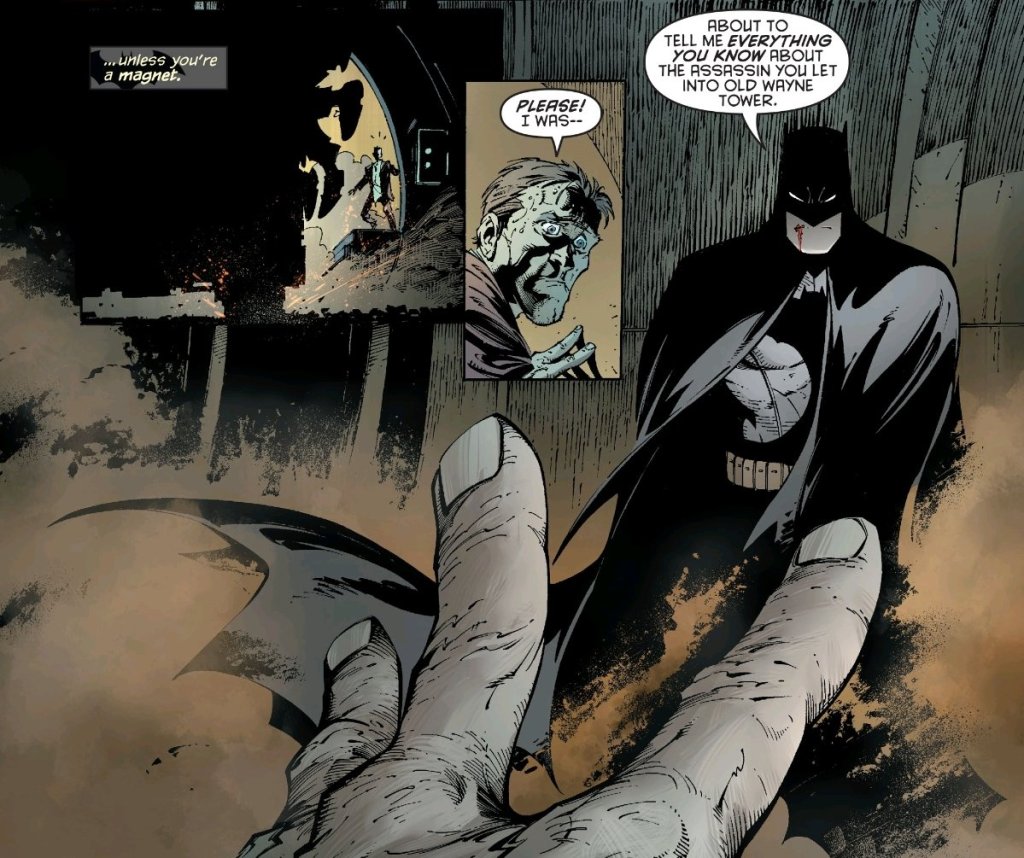
This idea that a city is fundamentally changing, that it’s impossible to truly know everything about a city, is the backbone of this arc. It’s the idea that, even if you think you’ve got a handle on something, it will always shift, obfuscate, or evolve. It’s teaching Batman that he can’t be complacent. The Court of Owls speaks directly to the mysterious idea that there’s always a larger force out there, manipulating things from the shadows. Hiding in plain sight.
The exchange between Bruce and Dick also plants the seed for the element electrum, which will later play a pivotal role in the larger tapestry of this run, but we’ll get there in time. For this story, the element – given prolonged enough exposure in the bloodstream – is how the Court can reanimate the dead and use them as their Talons. It also allows the Talons to heal their wounds. It’s revealed that the way to stop this effect is through lowering their core body temperature, which, of course, will come into play later.
Issue #7 wraps up with the Court ushering all of their Talons out into the skyline of Gotham, commanding them to take the city. It’s dramatic and effective. We’ve seen the damage just one Talon can cause, and we’ve also seen how effectively they’ve undermined the systems of Gotham. This ending promises a sharp jump in the scale of this story.
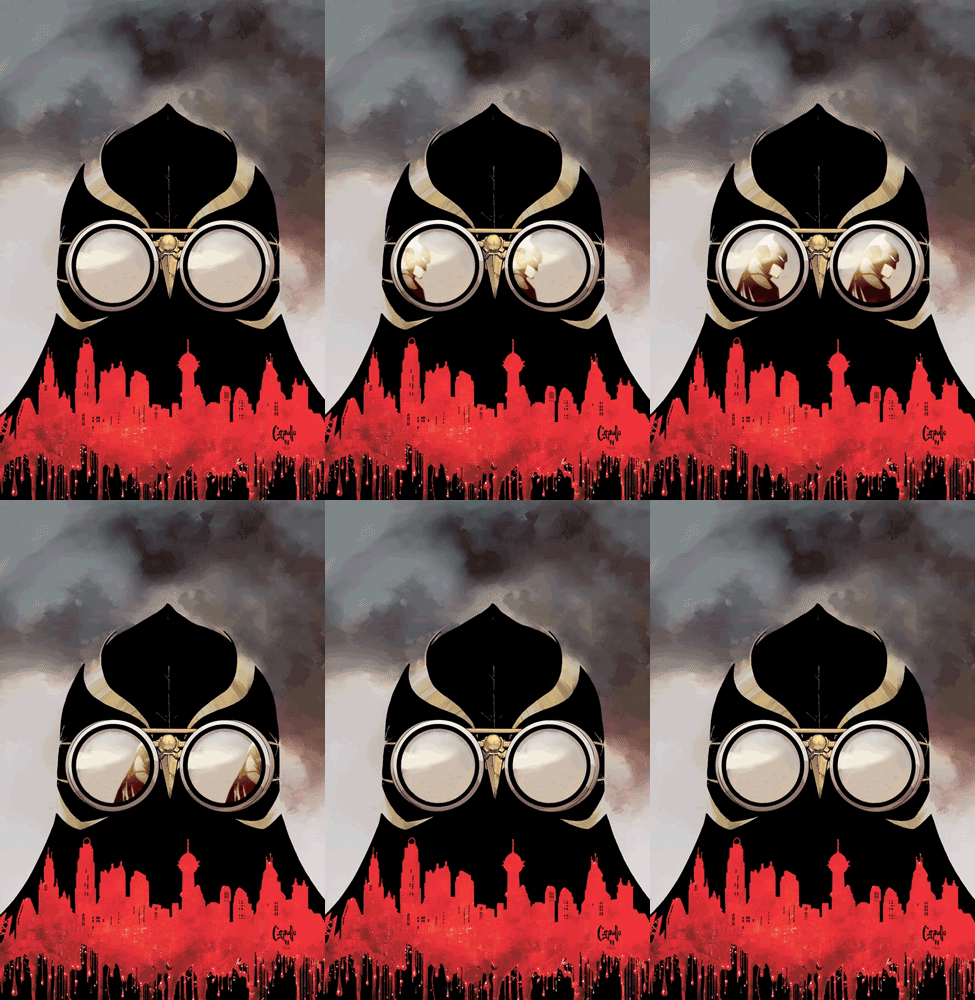
These first seven issues, collected as one trade volume titled The Court of Owls, are a complete masterclass in starting a run. There’s a reason this arc became character-defining. Snyder nails the voice of Batman and understands what the character needs to shine. He puts him through the wringer with a truly compelling new villain, brings a meaningful theme to provide the undercurrent for the story, and sets up a worthwhile mystery. Capullo, Glapion, and FCO take storytelling to exceptional heights with their visuals and make this book one for the ages.
