
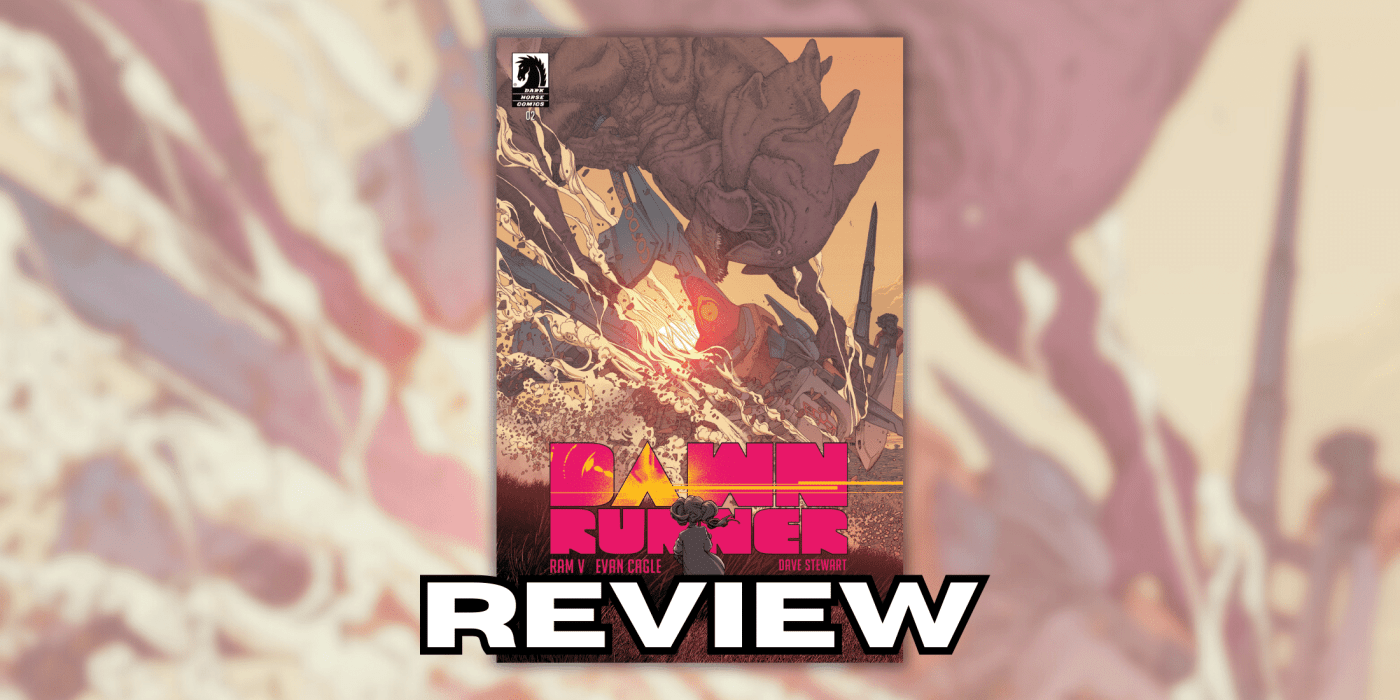
Dawnrunner #2 – Mechs and Mind-Melds, a Reflective Review
How can you not love a great mech – or mecha – story? Mechs, mechas, giant robots, whatever you want to call them, most people agree that they are generally pretty awesome to see. They are also fairly well-trodden ground, and writer Ram V has a noticeable lack of interest in telling stories that have been done before. This is exactly what makes Dawnrunner feel so special. Dawnrunner #2, written by Ram V with art by Evan Cagle, colors by Dave Stewart, and letters by Aditya Bidikar, blends the classic tropes of a giant-mech versus monster battle with philosophy and… linguistics. Bear with me.
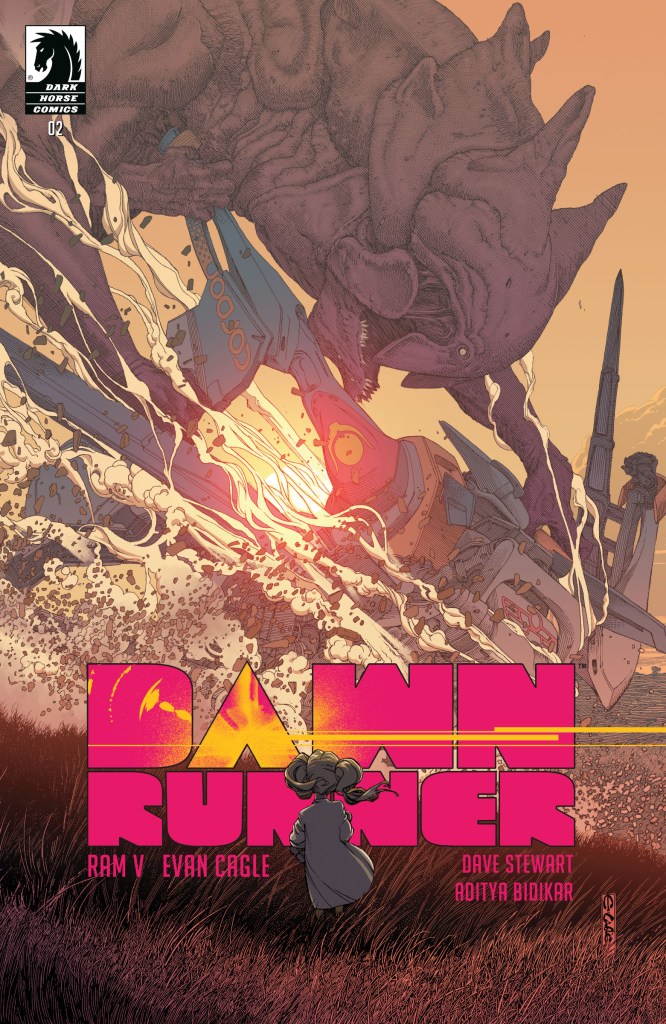
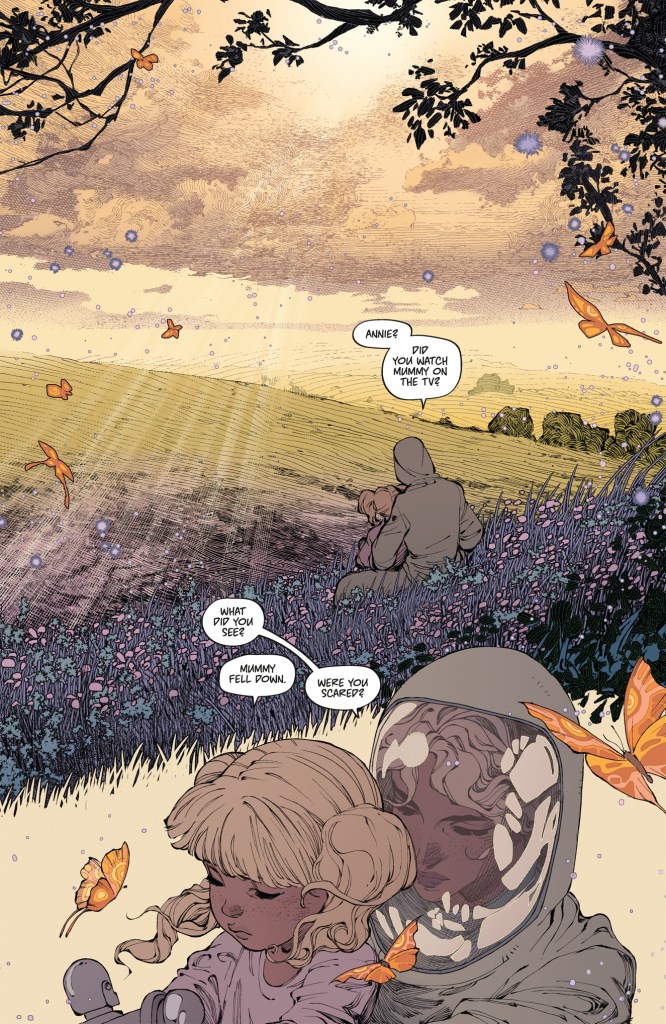
The first issue set the stage: a century ago a portal opened over Central America and the Tetza – gigantic creatures humanity will have to find a way to fight – came through. Humanity does what humanity does. It evolves and improvises. In the following century, countries are dissolved and resources are diverted to one goal – the Iron Kings. Iron Kings are giant, mechanized robots that can go fist-to-fist with the Tetza’s. They are humanity’s only defense against the creatures. Well, that and a giant wall because of course humanity is going to construct a giant wall to keep out the other.
The series gets its title from a new Iron King being debuted – dubbed Dawnrunner – which is being piloted by star Iron King pilot Anita Marr. In this world, the Iron King’s fighting the Tetza’s has become a spectacle sport, streamed to the world as entertainment. It’s a coping mechanism for a war with seemingly no end. The Iron King pilots have inevitably become superstars, and the battles to the death are treated as sport. Anita piloted Dawnrunner for the first time at the end of issue one, and though it’s promised to be a gigantic leap forward in tech for the Iron Kings, it malfunctions in its first outing.
Here’s where we circle back to linguistics and philosophy, and where this book completely hooked me. Without getting too into spoilers, this book takes a keen interest in the why and how of the Tetza’s behavior. One of the key side characters is a linguistic analyst, taking cues from the film Arrival when it comes to alien first contact. He – and his research group – are there to try to understand the Tetza. In another similarity to Arrival, there’s some trippy mental time displacement happening with the Dawnrunner mech itself, and it seems it’s only going to get weirder as the series progresses. Giant robots fighting giant monsters will always be cool, but the psychological and philosophical underpinnings presented in these first two issues are an enthralling narrative hook.
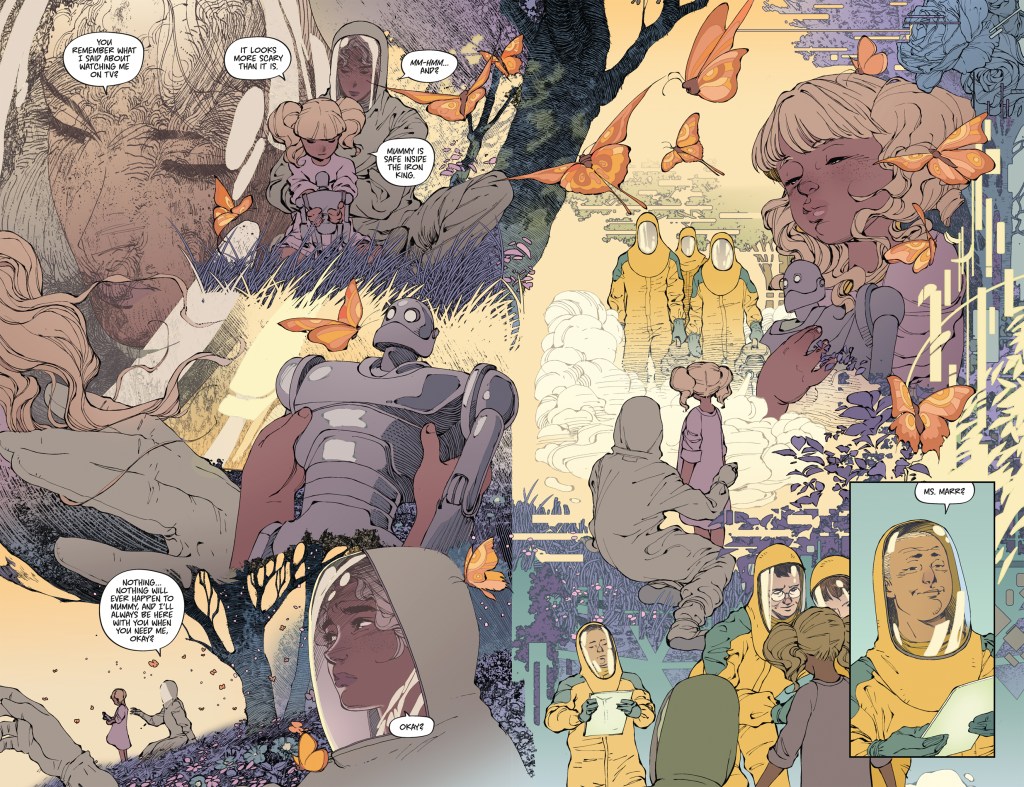
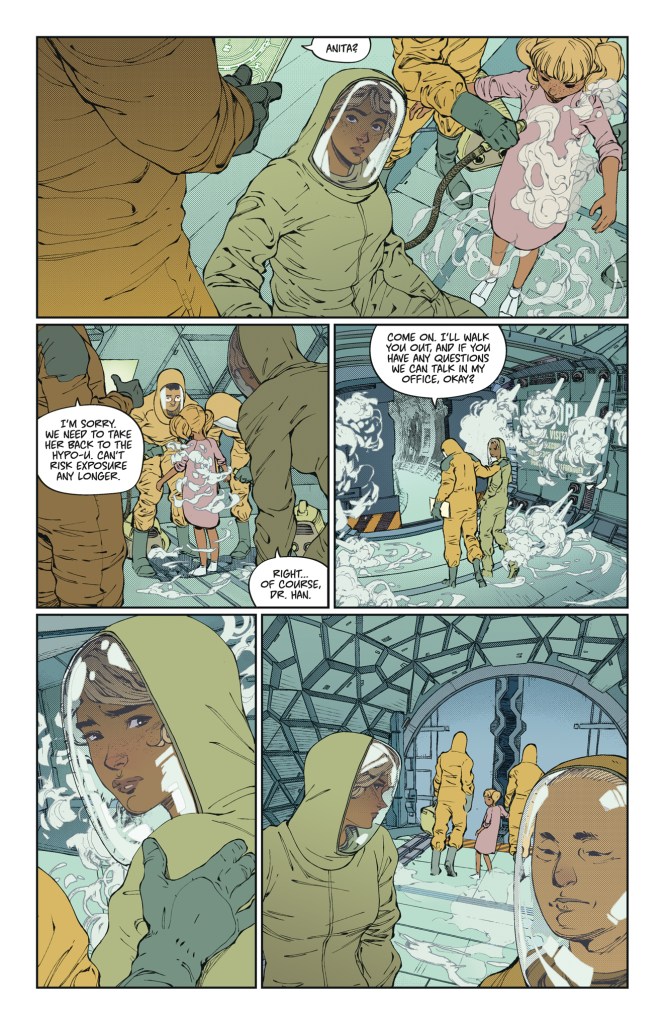
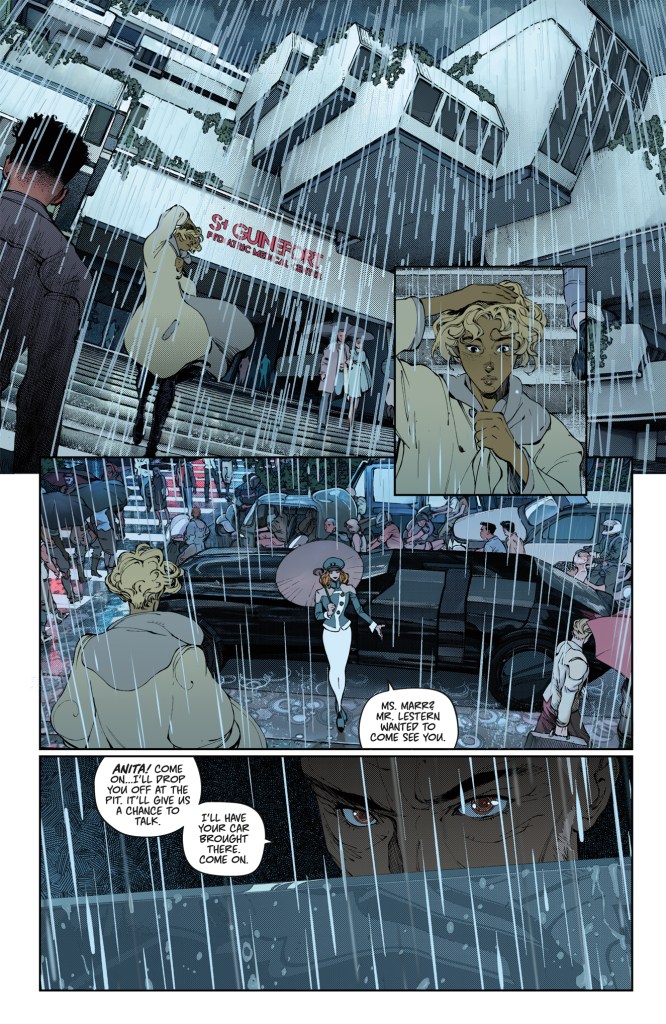
Now, to tackle the looming robot in the room, Evan Cagle’s art is simply sublime. It is truly everything you could want from a comic tackling mechs and monsters. The level of detail, the staggering sense of scale, the ferocity in action, the intimacy in character expressions, it’s all there and it all shines. Every page is worth the price of admission. Cagle’s work is a wonder. The action is huge, as it needs to be, and will leave you slack-jawed – much like the monsters after a fight with an Iron King. It’s kinetic, with pages that are laid out with pinpoint precision for narrative beats.
Stewart’s colors accompany Cagle’s ludicrously realized art and work in complete tandem to elevate this book. There’s an intense contrast in action sequences that feel like pop art while presenting a grizzled, broken robot and mangled monster. It’s a brilliant sight to see. Warm hues create a sense of comfort in heartfelt scenes while deep, somber blues cloud an emotionally compromised argument. Stewart knows exactly what level to render each color and tone, and consistently delivers the most visually emphatic and appropriate palette in any given scene.
Aditya Bidikar rounds out the main creative team on letters and continues the trend of knocking it out of the park. There’s a personal feel to the lettering that brings a sense of closeness to the events happening. Dialogue bubbles and caption boxes are clean and precise. There are two noticeable changes in style, one for loudspeaker announcements, and one for when things get weird with time slippage later in the book. They’re both noticeable in the right ways. It’s not jarring but rather works to orient the reader within the world of the story while providing clear information.
This book is, simply put, a banger. There has been a bunch of buzz surrounding it online since its release, and for good reason. It wears some of its influences on its sleeve, Neon Genesis: Evangelion is a clear visual inspiration, and you can’t go wrong there. But some of its other influences are more subtle, and perhaps more telling of the direction this story is going. I can’t get the Arrival comparisons out of my head, and that’s part of what makes it so compelling. Come for the robot and monster fights, stay for the lingering questions about the nature of communication and understanding. Dawnrunner #2 delivers a staggering, visceral, all-senses experience.
