
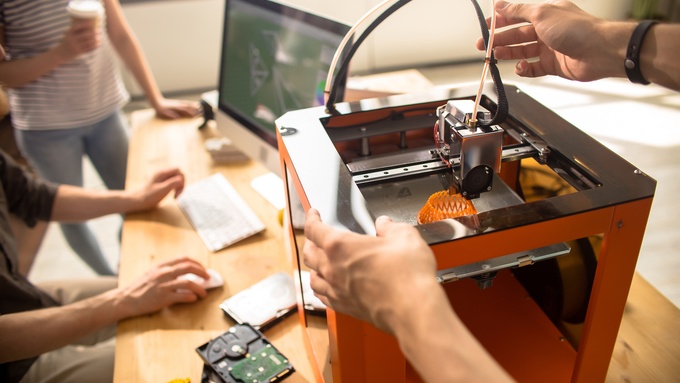
Printing three-dimensional objects has revolutionized the way we create. With its ability to transform digital designs into tangible objects, it’s no wonder why this technology fascinates so many. What makes a 3D printer work? Read on and learn more about the five vital components that make 3D printers functional.
Extruder/Print Head
The extruder, often referred to as the print head, handles the melting and deposition of the filament. It consists of two main parts—the hot end, which melts the filament, and the cold end, which feeds the material into the system. The extruder works with extreme precision, laying down thin layers of material to build a design piece by piece. Temperature control guarantees consistent flow and adhesion. Without the extruder, there’d be no way to transform raw material into a structured form.
Build Platform
The build platform, or print bed, is where the magic takes place. This surface supports the printed object and provides a stable foundation during the process. Some print beds are heated, which is essential for keeping the material adhered and preventing warping. The precision of the platform affects the quality of the final product—a level surface can prevent imperfections. Many print beds are removable, making it easier to extract finished prints without damage.
Filament Supply
The filament supply is the lifeline for a 3D printer—it’s the raw material that forms printed objects. Available in PLA, ABS, or metal-infused filaments, it dictates the properties of your final design. It’s typically stored on a spool and fed through the printer to the extruder. Consistency in the flow of filament is vital; any interruptions can cause gaps or imperfections in the print. Some printers even feature filament sensors to detect when the supply is low or depleted.
Motion Systems
The motion system directs every movement. It governs the print head’s movement along the X, Y, and Z axes so that it places materials accurately, layer by layer. This component relies on stepper motors, belts, rails, and screws to create smooth, coordinated movements. Misalignment in these systems can lead to distorted or flawed prints. The motion system faithfully reproduces your designs, down to the finest detail.
Printer Software
The software is the brains behind every 3D print job, controlling the entire process from start to finish. It interprets the digital 3D model, typically in G-code, and sends instructions to the printer. The control system manages everything—temperature, filament extrusion, motion, and error detection. Without quality software, even the best hardware won’t produce prints. Modern 3D printer software offers user-friendly interfaces, making it accessible to hobbyists and professionals alike. Many programs also feature tools for optimizing designs, troubleshooting issues, or fine-tuning printer settings. Keep in mind that you need firmware updates for 3D printers for the sake of superior printer performance.
Understanding the vital components that make 3D printers function makes it clear why 3D printing is such a technological marvel. Whether you’re a beginner or a seasoned user, appreciating these systems will deepen your connection to this groundbreaking technology.
Leave a Reply