
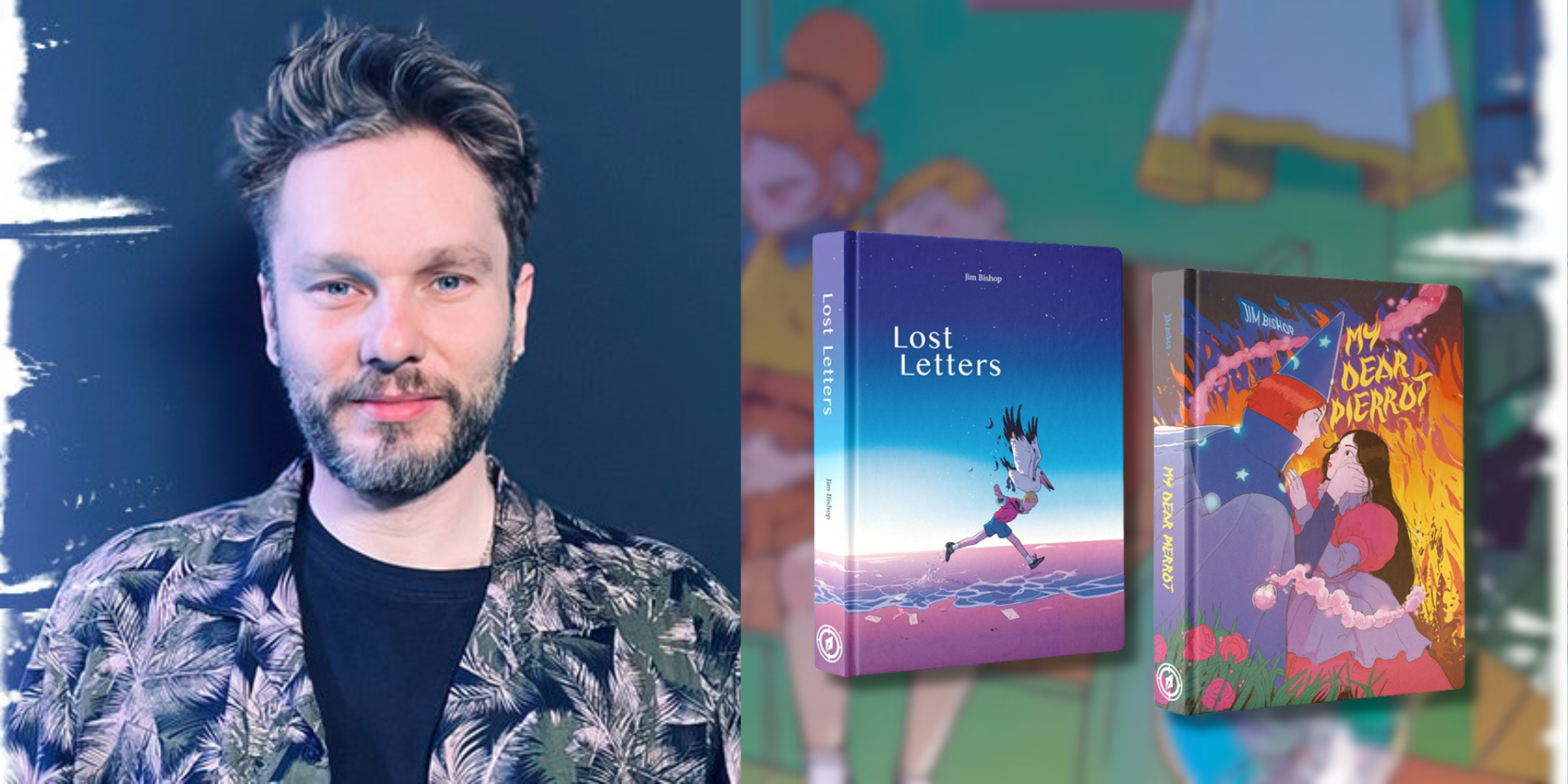
Award-Winning Creator Jim Bishop On Studio Ghibli-Inspired Fantasy Graphic Novels Lost Letters and My Dear Pierrot
From the acclaimed creator Jim Bishop, known for his work on Nubo, the Cloud Guardian, and Jill and Sherlock, comes an exciting release on Backerkit! For those who adore Studio Ghibli and Satoshi Kon, these captivating graphic novels, Lost Letters and My Dear Pierrot, are now available in English for the first time, brought to you exclusively by Magnetic Press.

LOST LETTERS
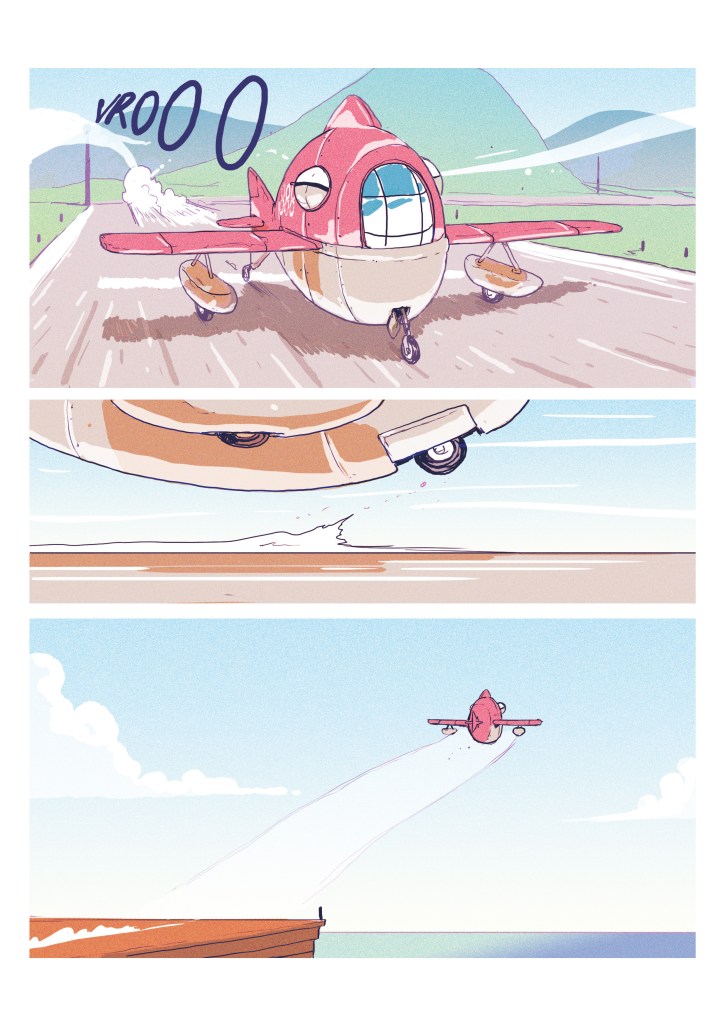
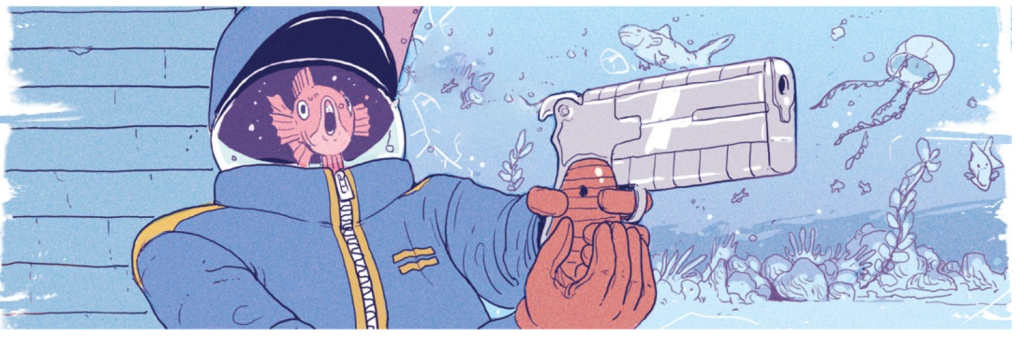
In a picturesque island where humans and fish coexist, young Iode is endlessly awaiting a delayed letter. His journey to the post office intertwines with a spirited hitchhiker entrusted with a mysterious package connected to the enigmatic underworld syndicate, “The Octopus”.
Together, they embark on an unexpected adventure leading to profound personal realizations, uncovering the hidden truths of their seemingly surreal town. LOST LETTERS delves into the themes of Family and Friendship amidst personal doubts, offering readers a multi-layered adventure filled with action, beautiful art, imagination, and quiet dignity.
This OGN, originally released in Europe in 2021, garnered multiple awards, including the International Manga Awards in Japan, the Lecteurs.com BD Prize, the France Bleu Comic Award, and the 2022 Orange Comics Prize.

MY DEAR PIERROT
Follow the gripping tale of Cléa, a young noblewoman destined for a comfortable life with the son of a Count, and her encounter with Pierrot, a charming street magician. As Pierrot introduces Cléa to a world of wonders and limitless possibilities, her pursuit of freedom gradually transforms into a fantasy thriller with dark twists and perilous consequences, leading to a deadly climax.
This is not your typical storybook romance; Jim Bishop artfully crafts a narrative that subverts reader expectations to explore the delicate balance between devotion and independence.


We had the opportunity to speak with Jim Bishop about his inspiration behind the crafting of these two tales. Check it out below and be sure to grab your copy of Lost Letters and My Dear Pierrot before the campaign ends on March 15th!
GN: Can you share the inspiration behind the narration and visual elements of “Lost Letters” and “My Dear Pierrot,” and how they contribute to the overall narrative?
JB: My graphic inspirations are diverse, but it is true that Miyazaki accompanied me like a guide, I wanted Lost Letters to take place by the sea to talk about a somewhat heavy subject, I wanted the general atmosphere to take us makes you breathe, and then I said to myself, ‘my favorite Ghibli is Porco Rosso’, so it has become a big source of inspiration.
And for My Friend Pierrot, it was by discovering the manga “Sorcerer’s Workshop” that I found the direction I wanted to go, even if Miyazaki didn’t stay far away. It is true that I deeply love Ghibli and Miyazaki but I am reaching a point for my next stories, where I would like to move away from them.
GN: What challenges did you encounter in adapting these graphic novels for an English-speaking audience, taking into account cultural nuances and artistic expression?
JB: While I didn’t part in the translation part, it is true that I created this comic by placing it in a universe that spoke to me, without ever thinking that it would be translated one day. I was so happy that Magnetic brought the book to a new audience in the English language!
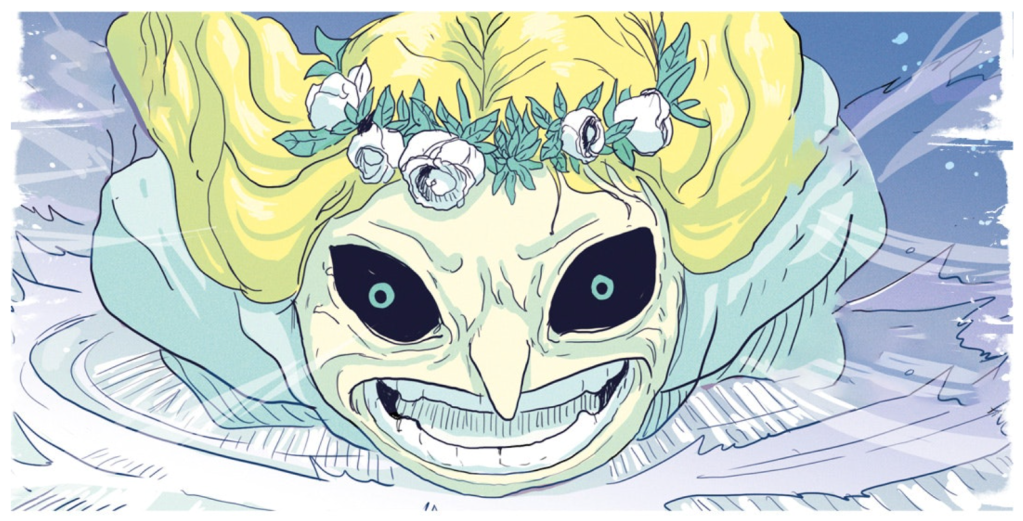
GN: How does your artistic style evolve or remain consistent across “Lost Letters” and “My Dear Pierrot,” and what impact does it have on the reader’s experience?
JB: There’s an evolution of tone and atmosphere depending on the emotion that the characters experience, it is about playing with the ranges of colors or the lines which can sometimes become more expressive, even if this is nuanced, it can be felt especially in My Dear Pierrot, this immediately creates the emotional context for the reader who can more easily understand where the characters are located, and be more easily touched, or empathize, or not, with the characters.
GN: In both graphic novels, there seems to be a mixture of genres. How did you manage to combine different storytelling elements, and what does this add to the richness of the stories?
JB: It’s part of my overall culture I think, I consume everything. All types of comics or films including different genres, horror, fantasy etc. Even films or comics by authors are more based on symbolism. And also simpler comedies. Music, video games are also part of my work, they inspire me enormously when writing. I think that all of this combined makes me regurgitate and it gives stories with nuances that are, I think, well felt.
GN: What motivated you to create these graphic novels and what do you hope readers will take away from these stories?
JB: What motivated me was, firstly, my love for comics and storytelling, telling stories, but these were more precisely inspired by real events, by things I had experienced that I needed to express as therapy. I feel that with each of these comics finished, I left something behind that weighed heavily on me.
Thank you to the readers for sharing with me all these moments of therapy, I hope that this touches something and will help them to better understand the moments that they can also be experienced.

Leave a Reply