
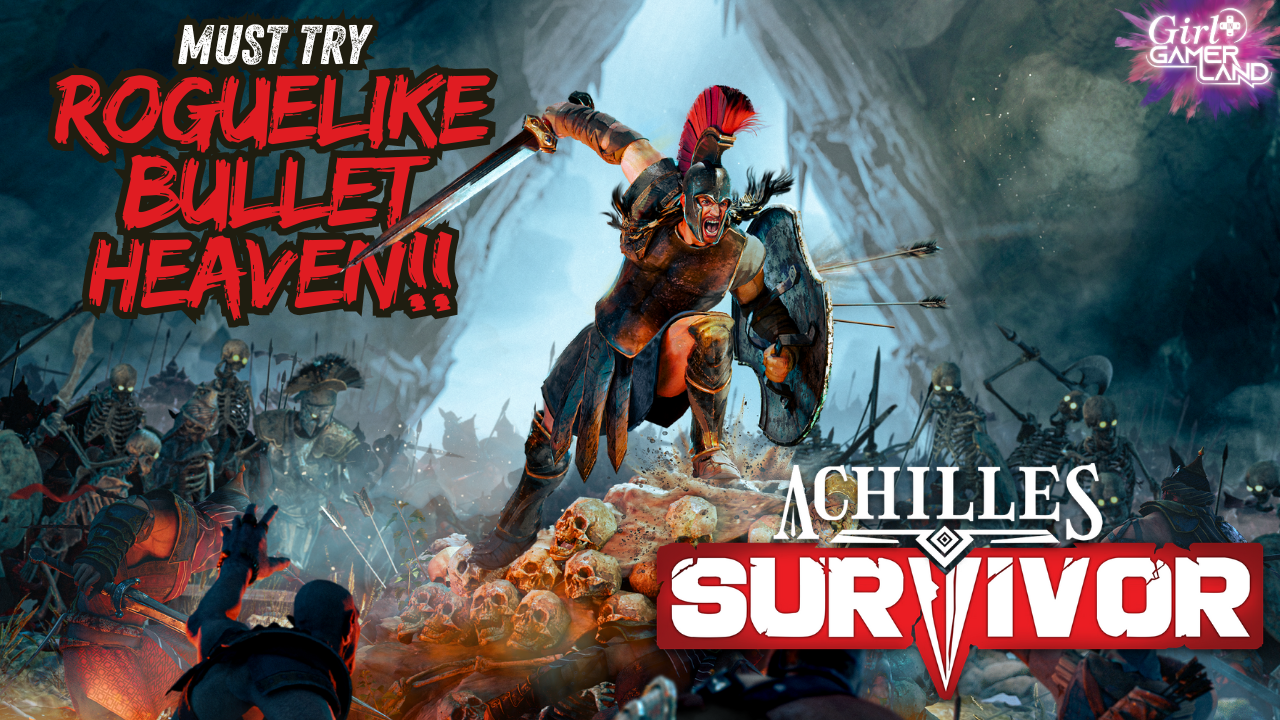
Achilles: Survivor, developed by Dark Point Games, is a fast-paced bullet hell rogue-lite that hurls players into a mythological maelstrom of monsters, mayhem, and moment-to-moment survival. Building off the narrative backdrop of Achilles: Legends Untold, this spinoff takes a sharp turn from RPG roots to deliver an adrenaline-fueled survival experience that’s both familiar and refreshingly layered.
At a glance, it might resemble a Greco-Roman Vampire Survivors, and in many ways it is. But stick with it, and Achilles: Survivor reveals deeper gameplay systems that blend real-time strategy elements, base building, and some light RPG flavoring into its core loop.

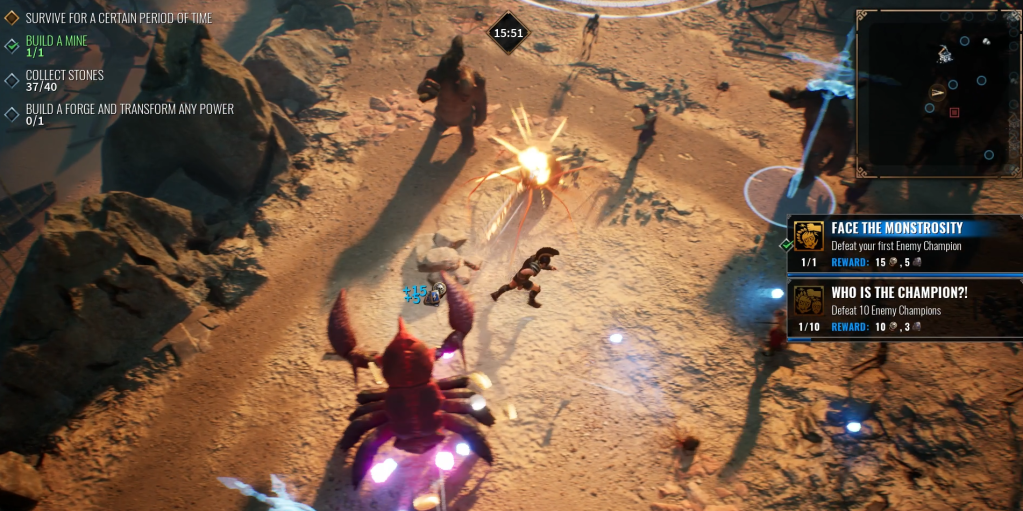
The formula is easy to recognize: you begin as Achilles amidst the siege of Troy, surrounded by mythological foes like cyclopes, skeletons, and venomous spiders. Your attacks begin modestly, but as you collect XP gems, level up, and choose from a set of randomized upgrades, your arsenal quickly expands into a swirling storm of death-dealing abilities. Think Shield Throws ricocheting across the battlefield, Chimera Spikes ripping through enemy lines, and area-of-effect chaos making your screen a glowing light show of destruction.
Where Achilles: Survivor separates itself from the crowd is in its strategic elements. Scattered across each map are construction sites—mini RTS-style control points—where you can build structures like turrets, healing stations, and Myrmidon-spawning barracks. These additions add a significant layer of tactical choice, encouraging players to juggle aggressive movement with defensive planning. Mismanaging resources or ignoring these build opportunities can lead to being overwhelmed, even if your character is strong.
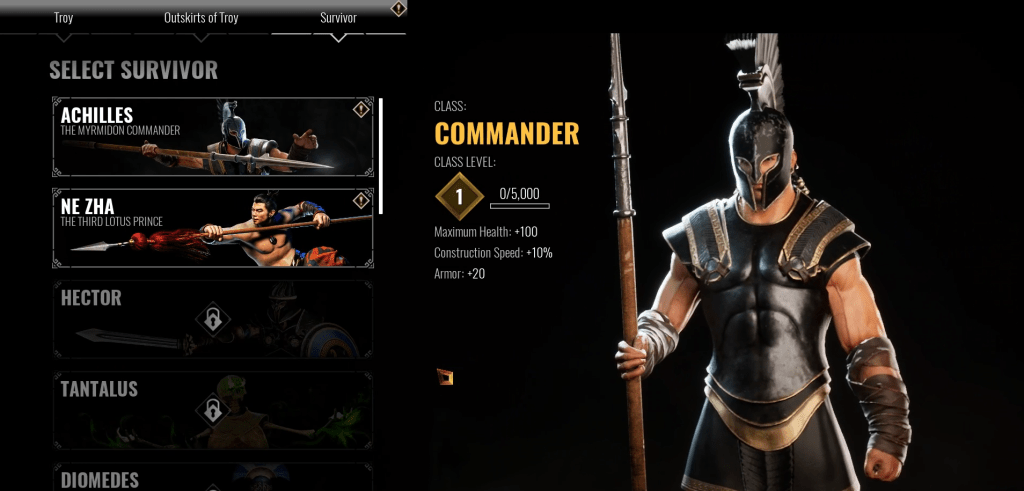
The game boasts 11 unlockable characters, each with their own stats and strengths, from movement speed to attack range. While the early experience is relatively linear, advanced runs require you to juggle character build, battlefield control, and resource management. The upgrade system also includes “Favors,” passive boosts purchased using Obols (earned during runs), ensuring progression doesn’t feel like a grind even after repeated attempts.
As the minutes tick down in each 20-minute survival session, enemies become more aggressive, culminating in boss encounters. Bringing them down isn’t just satisfying; it also nets temporary buffs and XP boosts that can be the difference between survival and starting over.
Visually, Achilles: Survivor combines the ancient mythological aesthetic of games like Titan Quest with the modern saturation of effects you’d expect in the bullet hell genre. It’s clean, detailed, and impressive in motion, particularly as the battlefield swells with enemies and effects fly across the screen.
Despite the genre being saturated, there’s something genuinely compelling about the way Achilles: Survivor approaches its formula. It doesn’t reinvent the wheel, but it refines the spokes and adds some cool new gears. The RTS-lite mechanics are especially welcome, introducing decision-making moments that slow down the chaos just enough to reward strategic thinking.
Achilles: Survivor won’t radically change how you view survival rogue-lites, but it absolutely earns its place among the best in the genre. It’s tight, addictive, and surprisingly deep once you begin exploring its systems beyond the initial chaos. While it may not be the most daring entry out there, its execution and mythological flair make it a worthwhile experience for fans of both Greek mythology and action-packed survival games.
Rating: 8/10

Leave a Reply