
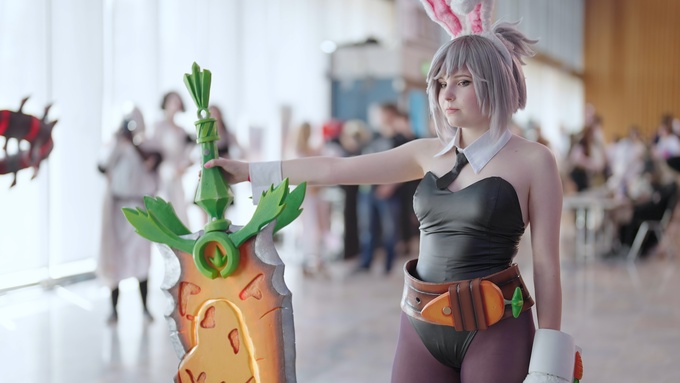
A cosplay build can look perfect on your desk and still fall apart halfway through day one at a convention. It usually isn’t the big, flashy pieces that fail; it’s the small stuff. Clips snap, strap mounts crack, and connectors loosen after a few hours of real use.
If you’re trying to build 3D-printed cosplay parts that actually survive cons, you have to think past how something looks and start thinking about how it’s going to be used in the real world.
Start With the Parts Most Likely To Fail
Every build has weak points. In cosplay, it’s almost always the same areas: thin connection points, hinges, mounting tabs, or anywhere a strap pulls against the surface.
These spots take repeated stress every time you move, sit, or adjust your costume. If something is going to give out, it’s usually one of these parts, not the larger, more visible sections.
Test the Weak Points First
Instead of jumping straight into a full print, isolate the risky areas and test them on their own.
If you’re working on a forearm piece with a clasp, print just the clasp. If your prop has an attachment point, test that connection separately. It might feel like an extra step, but it’s a lot better than reprinting an entire piece because one small section failed.
That print–test–tweak loop isn’t just something cosplay builders rely on. Engineers use iterative prototyping for functional parts to make sure designs actually hold up before creating final materials.
Reinforce It Without Bulking It Up
Once your test pieces hold up, focus on strengthening the design without ruining the look.
Small tweaks go a long way. Rounded edges tend to handle stress better than sharp corners, and slightly thicker bases at connection points can help prevent cracks from forming over time.
If a part needs to carry weight, like a shoulder strap, belt clip, or holster mount, try to spread that load across a wider area instead of forcing one thin section to do all the work.
Do a Real “Con Test”
Before calling it done, wear the piece and actually move around in it.
Sit down. Stand up. Reach for something. Twist a bit. Basically, move the way you would at a convention. A part that feels solid when you’re standing still can start to fail pretty quickly once you’re in motion for hours.
Catching those issues early is what separates something that just looks good from something you can wear all day.
Think Beyond the Final Look
At the end of the day, learning how to build 3D-printed cosplay parts that survive cons comes down to planning for stress, not just appearance.
When your connectors and high-pressure areas are dialed in, everything else, from paint to detail work, has a much better shot at making it through the entire event.
Leave a Reply